



Abstract
This comprehensive guide explores the fundamental differences between knit and woven clothing, examining their construction methods, structural characteristics, performance properties, and optimal applications in apparel manufacturing.
Understanding these distinctions enables informed sourcing decisions for B2B buyers in the textile and garment industries. While both fabric types serve essential roles in commercial textile production, their divergent manufacturing processes create distinct performance profiles that directly impact product selection, cost structures, and end-use suitability.
This analysis provides procurement professionals with technical criteria for fabric specification, quality benchmarking protocols, and application-matched sourcing strategies that optimize total cost of ownership across diverse apparel categories.
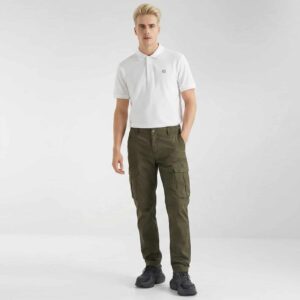
Construction Methods: Knitting vs. Weaving
How Knit Fabrics Are Made?
Knit fabrics are constructed through a continuous interlocking loop formation process where a single yarn or multiple yarns create successive rows of loops that interlock vertically and horizontally. The fundamental unit—a loop consisting of a head, two legs, and two feet—connects to adjacent loops through mechanical manipulation rather than perpendicular interlacement. Modern circular knitting machines operate at speeds exceeding 40 revolutions per minute, producing tubular fabrics with diameters ranging from 12 to 60 inches, while flat knitting machines create open-width fabrics with selvedge edges.
The yarn path in knitting follows a meandering course, alternating between needles in a sequential pattern that determines fabric structure. Weft knitting (most common in apparel) feeds yarn horizontally across the fabric width, with each course representing one complete yarn passage. Warp knitting utilizes multiple yarn systems running vertically, creating more stable structures suitable for technical textiles. Production machinery includes single jersey machines for basic T-shirt fabrics, rib machines for cuffs and waistbands, and interlock machines for double-face constructions. Gauge measurement (needles per inch) directly influences fabric weight and stretch properties, with typical apparel gauges ranging from 18 to 32.
How Woven Fabrics Are Constructed?
Woven fabrics result from the perpendicular interlacement of two distinct yarn systems: warp yarns (lengthwise, parallel to selvedge) and weft yarns (crosswise, filling). Loom operation follows a four-step cycle: shedding (separating warp yarns into upper and lower layers), picking (inserting weft yarn through the shed), beating (pushing weft yarn against the face of the cloth), and taking-up (advancing completed fabric). Modern air-jet and rapier looms achieve insertion rates exceeding 1,200 picks per minute, with production widths spanning 150 to 360 centimeters.
The three fundamental weave structures govern fabric characteristics: plain weave creates maximum interlacement frequency (each weft crosses alternating warps), producing durable, balanced fabrics like poplin and canvas; twill weave generates diagonal lines through staggered interlacement, offering superior drape and abrasion resistance in denim and gabardine; satin weave minimizes interlacement points to create lustrous surfaces with floating yarns, exemplified in sateen and charmeuse constructions. Thread count (ends per inch × picks per inch) serves as a primary quality indicator, with premium shirting fabrics exceeding 200 threads per inch. Warp tension control, beam preparation quality, and sizing application critically affect production efficiency and fabric uniformity.
Key Structural and Performance Differences
Physical Characteristics Comparison
The loop-based architecture of knit fabrics delivers inherent mechanical stretch ranging from 25% to 200%, depending on construction type, while woven fabrics exhibit minimal elongation (typically under 5%) unless elastomeric yarns are incorporated. This fundamental difference dictates comfort profiles: knit garments conform to body contours through elastic recovery, whereas woven garments maintain dimensional stability and structured silhouettes. Breathability varies significantly—single jersey knits provide superior air permeability (150-250 cubic feet per minute per square foot) compared to tightly woven fabrics (50-120 CFM/ft²), making knits preferable for activewear applications.
Drape characteristics diverge based on structural rigidity: woven fabrics demonstrate crisp, angular drape suitable for tailored garments, while knits exhibit fluid, body-conforming drape. Weight ranges overlap considerably, though production methods influence typical values: lightweight single jersey knits start at 120 GSM (grams per square meter), while comparable woven voiles begin at 80 GSM. Recovery properties—the ability to return to original dimensions after deformation—favor knits for applications requiring repeated stretching, whereas woven fabrics excel in shape retention for structured garments.
Knit vs. Woven Fabric Comparison Matrix
| Property | Knit Fabrics | Woven Fabrics |
|---|---|---|
| Stretch (%) | 25-200% (bi-directional) | <5% (unless elastane added) |
| Åndbarhed | High (150-250 CFM/ft²) | Moderate (50-120 CFM/ft²) |
| Vurdering af holdbarhed | Moderate (prone to snagging) | High (superior abrasion resistance) |
| Wrinkle Resistance | Excellent (elastic recovery) | Low to Moderate (requires finishing) |
| Typical Weight Range | 120-300 GSM | 80-400 GSM |
| Production Speed | 40+ RPM (circular knitting) | 800-1200 PPM (weaving) |
| Dimensional Stability | Moderate (relaxation shrinkage) | High (minimal distortion) |
| Fraying Tendency | Low (runs/ladders instead) | High (requires edge finishing) |
Durability and Maintenance Requirements
Woven fabrics demonstrate superior abrasion resistance due to yarn interlacement stability, achieving 50,000+ Martindale cycles in workwear applications compared to 15,000-25,000 cycles for standard knits. However, knit structures resist tearing forces more effectively—a pulled loop redistributes stress across the fabric rather than propagating a straight tear. Dimensional stability challenges differ: knits experience relaxation shrinkage (3-8% in the first wash) as loops adjust to equilibrium positions, while wovens undergo minimal shrinkage (<2%) when properly finished with sanforization or compressive treatments.
Care instruction complexity varies by construction. Woven cotton garments withstand high-temperature washing (60-90°C) and aggressive mechanical action, suitable for industrial laundry processing. Knit fabrics require gentler handling—medium temperatures (30-40°C), reduced agitation, and flat drying to prevent distortion. Commercial lifespan expectations under institutional use conditions: woven uniforms typically deliver 75-100 wash cycles before replacement, while knit garments achieve 50-75 cycles. Pilling resistance favors tightly woven structures, though modern anti-pilling finishes on knits narrow this performance gap.
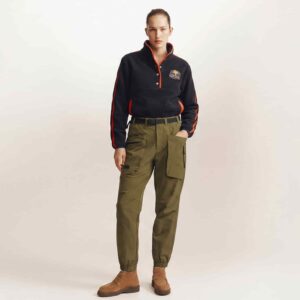
Commercial Applications and Product Categories
Typical Knit Clothing Applications
Knit fabrics dominate categories requiring comfort, flexibility, and body-conforming fit. T-shirt manufacturing represents the largest volume application, with single jersey cotton and cotton-polyester blends accounting for over 2 billion units annually in global trade. Activewear and athleisure segments leverage moisture-wicking polyester knits (often incorporating spandex at 5-15%) for yoga pants, running tops, and compression garments where four-way stretch enhances performance.
Underwear production relies almost exclusively on knit constructions—cotton jersey for everyday basics, modal blends for premium comfort, and technical knits with antimicrobial treatments for performance underwear. Hosiery manufacturing utilizes fine-gauge warp knitting (up to 400 needles per inch) to create sheer, elastic stockings and socks with engineered compression zones. The casualwear segment employs fleece knits (brushed on interior surfaces) for sweatshirts and loungewear, while interlock and rib knits serve polo shirts and children’s apparel requiring durability with stretch.
Common Woven Clothing Uses
Woven fabrics establish industry standards for formal wear, where structured silhouettes and crisp appearance define quality expectations. Men’s dress shirts utilize poplin, Oxford, and twill weaves in thread counts from 80 to 200+, with long-staple cotton yarns delivering superior hand feel. Suit manufacturing depends on worsted wool twills and plain weaves, where dimensional stability maintains sharp creases and tailored lines through extended wear cycles.
Outerwear applications exploit woven fabrics’ superior wind resistance and layering capability. Canvas jackets, denim workwear, and technical shell garments employ tightly woven constructions with water-repellent finishes. Industrial workwear specifies heavy twills (280-400 GSM) meeting EN ISO 13688 standards for protective clothing, where abrasion resistance and tear strength prove critical. Home textile markets consume vast quantities of woven fabrics—bed linens utilize percale and sateen weaves, upholstery relies on jacquard and dobby constructions, and drapery fabrics employ decorative weave patterns for aesthetic appeal.
Sourcing Considerations for B2B Buyers
Cost Analysis and MOQ Factors
Raw material costs constitute 45-60% of finished fabric pricing for both categories, though processing expenses diverge significantly. Knitting operations require lower capital investment (circular knitting machines: $30,000-$80,000) compared to weaving infrastructure (air-jet looms: $80,000-$150,000), influencing price-per-meter calculations. Standard cotton jersey wholesales at $2.50-$4.00/meter, while comparable woven poplin ranges $3.00-$5.50/meter due to higher production complexity and slower output rates.
Minimum order quantities reflect production efficiency thresholds: knit fabric suppliers typically specify 500-1,000 meters per color/construction, while woven fabric MOQs start at 1,500-3,000 meters due to loom setup requirements and beam preparation costs. Lead times for stock-supported basics (white, black, navy) average 15-25 days for knits versus 25-35 days for wovens. Custom color development extends timelines by 10-15 days for both categories, with dye lot consistency more challenging in knits due to tension variations during processing.
Production planning must account for yield differences: knit fabrics experience 8-12% waste during cutting due to edge curling and relaxation, while woven fabrics generate 5-8% waste. However, knit garment assembly proves faster (15-20% time reduction) due to fewer seam treatments and simplified construction techniques, partially offsetting higher material waste.
Quality Control Standards
International testing protocols establish objective performance benchmarks for procurement specifications. ASTM D3887 governs knit fabric dimensional changes, measuring relaxation shrinkage, consolidation shrinkage, and growth after laundering cycles. ASTM D3775 standardizes woven fabric thread count determination through direct counting methods or automated optical analysis. ISO 13934-1 (tensile strength testing) applies to both fabric types, but with different acceptance criteria—woven fabrics typically demonstrate 2-3× higher breaking strength in warp direction compared to knit fabrics of equivalent weight.
Compliance requirements for international markets demand specific certifications: OEKO-TEX Standard 100 for chemical safety (mandatory for EU markets), REACH regulation conformity for restricted substances, and CPSIA compliance for children’s products in US markets. Functional performance testing includes ISO 12947 (abrasion resistance), ISO 6330 (domestic washing procedures), and AATCC 135 (dimensional changes). B2B buyers should specify pre-shipment inspection protocols covering fabric weight tolerance (±5%), color fastness minimums (Grade 4 for washing, Grade 3-4 for light), and defect acceptance levels (4-point system with maximum 28 points per 100 square yards).
Third-party laboratory testing costs range $800-$1,500 per fabric construction for comprehensive analysis, representing an essential investment for large-volume contracts exceeding 10,000 meters. Supplier qualification should verify ISO 9001 certification, production capacity documentation, and historical performance data on delivery reliability and quality consistency.
FAQ-modul
Q1: Can woven fabrics be made stretchy like knit fabrics?
Yes, through elastomeric yarn incorporation. Modern stretch woven fabrics blend 2-5% spandex (elastane) with cotton, polyester, or wool to achieve 15-30% elongation while maintaining the woven fabric’s structural characteristics. Mechanical stretch weaving techniques using textured yarns can deliver 10-15% stretch without elastomers. However, woven stretch fabrics never match the multi-directional elasticity or recovery speed. Applications include stretch denim, performance chinos, and fitted dress shirts, where moderate give enhances comfort without sacrificing tailored appearance.
Q2: Which fabric type is more suitable for high-volume uniform production?
Woven fabrics typically prove superior for institutional uniform programs due to extended service life (75-100 wash cycles vs. 50-75 for knits), dimensional stability that maintains professional appearance, and compatibility with industrial laundry processing at high temperatures. Healthcare uniforms increasingly specify polyester-cotton twills (65/35 blend) meeting NFPA 702 flame resistance standards. However, knit polo shirts dominate hospitality and retail uniforms, where comfort and ease of movement outweigh durability considerations. Total cost analysis should evaluate replacement frequency, laundering expenses, and end-user satisfaction metrics rather than initial purchase price alone.
Q3: How do shrinkage rates differ between knit and woven garments?
Knit fabrics experience greater dimensional change, primarily through relaxation shrinkage (3-8% in length, 2-5% in width during the first wash) as mechanically-stressed loops return to natural equilibrium positions. Woven fabrics shrink minimally (<2%) when properly finished with compressive shrinkage processes like sanforization. Critical mitigation strategies: specify compacted knit fabrics pre-shrunk to <3% residual shrinkage, require AATCC 135 test reports documenting dimensional stability after three wash cycles, and adjust pattern grading to compensate for predicted shrinkage. Polyester blends (50%+ synthetic content) significantly reduce shrinkage in both fabric types through fiber stability, though 100% cotton constructions remain preferred for comfort-critical applications despite higher dimensional change.
Konklusion
Selecting between knit and woven clothing for B2B procurement demands systematic evaluation of application requirements, performance priorities, and total cost considerations beyond unit pricing. Knit fabrics deliver unmatched comfort, flexibility, and production efficiency for casualwear, activewear, and undergarments where body conformity and ease of movement define product success. Woven fabrics establish quality standards for formal wear, workwear, and applications requiring structural integrity, durability, and professional appearance retention through extended use cycles.
Critical decision factors include: end-use performance requirements (stretch vs. stability), maintenance infrastructure compatibility (industrial vs. gentle laundering), expected service life under actual use conditions, and regulatory compliance mandates for target markets. Sophisticated buyers recognize that fabric construction represents only one variable in garment quality—yarn selection, finishing treatments, construction techniques, and quality control rigor equally influence product performance and customer satisfaction. Successful sourcing strategies integrate technical specification development, supplier qualification protocols, and ongoing performance monitoring to optimize value delivery across diverse apparel categories.