



A jacket that changes color with temperature already sounds like a design experiment. Add waterproof performance to that equation, and many people instinctively assume something has to give. Either the jacket sacrifices protection for visual effect, or the color-changing feature is nothing more than a surface trick that fades with use.
In reality, modern waterproof thermochromic jackets work precisely because these two functions are not in conflict. They are engineered to exist in parallel, each operating within its own layer and purpose. To understand why rain stays out while colors continue to shift, it helps to move past marketing terms and look at how these jackets are actually built and used.
This is not a story about novelty. It is a story about materials, structure, and design decisions that enable waterproof performance and thermochromic response to coexist in a single wearable system.
When Waterproofing and Color Change Seem to Conflict
Initially, waterproofing and thermochromic behavior appear to be in conflict. Waterproofackets that are associated with impermeable surfaces, dense coatings, and barrier-like design are often referred to as waterproof. Conversely, thermochromic fabrics utilize sensitivity as their sole criterion: the capacity of pigments or materials to respond to temperature changes specifically.
From the perspective of the user, the worry is obvious. If a coat is unable to block precipitation, wind, and stains, how can it still perceive temperature changes accurately enough to cause a perceptible color shift? Shouldn’t a coating that promotes protection have an effect on this responsiveness?
This supposition is derived from a simple understanding of howackets function. Many individuals believe that fabric is composed of a single layer that functions all at once. In actuality, modern outerwear is comprised of a series of components. Every layer has a purpose, and every function is specifically dedicated to a particular role within the system.
Once this logic layer is understood, the apparent contradiction between waterproofing and thermochromic technology is diminished.
How Waterproof Jackets Actually Stop Water
The waterproofness of the performance is not derived from the simple mechanical locking. If this happened, wearing a waterproof jacket would resemble the wearing of a plastic sheet: uncomfortable, stiff, and ineffective. Instead, water-resistantackets that are effective utilize membranes or coatings that prevent water from entering while still allowing flexibility and durability.
In many modern projects, a high-performance polyurethane coating is employed to shield the fabric from external moisture. This coating is resistant to rain, wind, and everyday wear without changing the fabric’s shape. The coating’s effectiveness is based on creating a continuous barrier that water droplets cannot permeate through under normal conditions; this barrier is long-lasting.
What’s important is that this barrier is designed to sit at its proper position. It doesn’t have to affect the visual or thermal response, because these functions aren’t dependent on the water passing through the fabric. They require the temperature to reach the thermochromic components, which can occur when the surface is still dry.
To clarify how waterproof protection is achieved without sacrificing wearability, it helps to look at the core principles involved:
-
Water resistance comes from coatings or membranes, not fabric thickness
-
Flexibility and softness are preserved through controlled coating application
-
Waterproofing targets liquid penetration, not thermal transfer
This distinction is essential. Blocking water does not mean blocking temperature.
Where Thermochromic Function Exists in the Jacket
Thermochromic technology does not operate like a mechanical switch. It is a material response. Special pigments or compounds change their molecular structure when exposed to certain temperature ranges, altering the way they reflect light. This change appears to the human eye as a shift in color.
Crucially, this response does not require direct contact with air or moisture. It requires exposure to temperature variation. Heat from the body, cooling from the environment, or shifts in ambient conditions are enough to trigger the effect.
In a waterproof thermochromic jacket, the color-changing function is integrated into the outer fabric or surface design layer, while waterproof protection is provided by a separate coating or functional layer. These elements are designed to work together, not overlap unnecessarily.
Common placements of thermochromic elements include:
-
Integration within the outer fabric’s dye or pigment system
-
Controlled application on fabric surfaces that remain flexible
-
Positioning above or independent from waterproof coatings
Because thermochromic pigments respond to temperature rather than moisture, the presence of a waterproof barrier beneath or around them does not cancel their function.
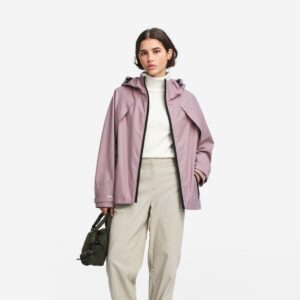
Why Waterproofing Does Not Cancel Color-Changing Performance
The key to compatibility lies in the separation of responsibilities. In a well-designed waterproof thermochromic jacket, no single layer is asked to do everything.
The waterproof layer is concerned with preventing rain, wind, and staining. The layer that focuses on the visual response to temperature is called the thermochromic layer. Other forms of energy, including thermal energy, can still be transmitted through fabric layers when water is unable to pass through. This is the reason why a coat can prevent you from getting wet in heavy precipitation while still exhibiting a visibly different temperature or external conditions.
This layered approach to engineering enables manufacturers to specifically tailor each function to their needs. Waterproofness can be increased without altering the color of the water, and the thermosensitivity of the water can be altered without diminishing the protection.
This is also the reason why theseackets are still popular rather than experimental. The wearer is not obligated to treat the garment differently. The jacket is still utilized as a daily outerwear, but with a new dimension that interacts with the wearer.
Lightweight Design and Cold-Weather Performance
Another misconception surrounding functional jackets is that advanced features require bulk. In practice, efficient material design often allows for lighter garments with reliable performance.
A waterproof thermochromic jacket with an 80GSM fabric weight can remain lightweight while still offering meaningful insulation. This balance comes from material efficiency rather than sheer mass. The jacket traps warmth effectively while maintaining flexibility and comfort.
Cold resistance down to approximately –20°C does not imply heavy padding. It reflects thoughtful construction that minimizes heat loss while allowing freedom of movement. For users, this means a jacket that feels easy to wear rather than restrictive, even in harsh conditions.
Lightweight construction also supports thermochromic performance. The fabric responds more quickly to temperature changes, making color transitions more noticeable and responsive during real-world use.
A Practical Comparison of Jacket Design Logic
Looking at standard waterproof jackets alongside waterproof thermochromic jackets helps clarify why the latter are not merely decorative upgrades.
| Aspect | Ordinary Waterproof Jacket | Waterproof Thermochromic Jacket |
|---|---|---|
| Primary Function | Protection from rain and wind | Protection plus temperature response |
| Visual Behavior | Fixed color | Color shifts with temperature |
| Fabric System | Functional coating and base fabric | Layered system with thermochromic integration |
| User Interaction | Passive protection | Interactive visual feedback |
| Design Complexity | Moderat | Higher, but purpose-driven |
This comparison shows that thermochromic functionality adds complexity, but not confusion. Each element exists for a clear reason.
Everyday Usability and Easy Care
Advanced functionality often raises maintenance concerns. Users may assume that jackets with color-changing features require delicate handling or special cleaning processes. In practice, modern waterproof thermochromic jackets are engineered for everyday convenience.
Machine washability and tumble-dry safety are not afterthoughts. They are design requirements. The materials and coatings are selected to maintain both waterproof integrity and thermochromic performance after repeated cleaning cycles.
This focus on easy care matters because it determines whether a jacket becomes part of daily life or remains an occasional novelty. A garment that performs well but demands extra effort rarely earns long-term use.
Why This Technology Is Moving Beyond Novelty
Thermochromic jackets initially attracted attention because they looked different. What keeps them relevant is that the visual effect serves a functional role. Color change offers immediate feedback about temperature conditions, helping users intuitively understand their environment.
In combination with waterproof protection, this feedback becomes more than aesthetic. It enhances awareness without requiring conscious effort. The jacket communicates conditions passively, through design rather than instruction.
Common contexts where this technology makes sense include:
-
Outdoor activities with shifting temperatures
-
Urban commuting across varying environments
-
Travel situations where the weather changes rapidly
In these settings, waterproof thermochromic jackets offer both protection and information, delivered through material behavior rather than screens or devices.
Customization and Practical Manufacturing Considerations
From a production perspective, jackets like these benefit from flexible customization options. Design styles, colors, and sizing can be adapted to different markets and usage scenarios. This adaptability allows brands to integrate thermochromic technology without abandoning their existing design language.
Minimum order quantities and stable production timelines support scalability, making these jackets viable not only for limited runs but also for broader distribution. Experienced manufacturing teams ensure that design intent is preserved from concept through delivery.
Customization does not weaken functionality. When managed correctly, it reinforces it by aligning performance features with real user needs.
A Balanced View of Innovation
Waterproof thermochromic jackets are not defined by spectacle. Their value lies in how quietly they work. Rain stays out. Wind is blocked. Colors shift naturally with temperature. None of these functions demands attention, yet all of them contribute to a more responsive wearing experience.
Innovation in clothing does not always mean reinventing how garments look or feel. Sometimes it means refining how materials behave together. Waterproof thermochromic jackets succeed because they respect that principle.
They remain dry because waterproofing targets moisture, not temperature. They change color because thermochromic materials respond to heat, not water. Once these roles are clearly separated, the technology stops feeling mysterious and starts feeling logical.
That logic is why these jackets are no longer experimental concepts. They are practical garments designed for real conditions, real users, and real weather.