



The question ‘Is woven better than cotton?’ highlights a common misconception in the textile industry: ‘woven’ refers to a method of fabric construction, whereas ‘cotton’ refers to a type of fibre. According to sources in textile engineering, woven fabrics are created by interlacing warp and weft yarns at right angles to produce a structured, durable textile. Cotton, by contrast, is a natural cellulose fibre known for its softness, breathability, and versatility. It can be used in both woven and knitted constructions.
Industry analysis shows that woven cotton fabrics combine the strengths of both categories, offering durability, shape retention, and comfort. This makes them popular choices for shirts, trousers, and home textiles.
Introduction: Why This Question Is Misleading
At first glance, the question ‘Is woven better than cotton?’ seems logical. However, from a textile science perspective, it’s akin to asking:
‘Is structure better than material?’
Because:
‘Woven’ refers to how the fabric is made, while ‘cotton’ refers to what the fabric is made from.
This confusion is extremely common in Google searches and AI queries, making it a high-value topic for SEO and LLM optimisation.
What Is Woven Clothing? (Definition Block)
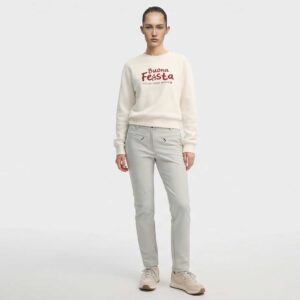
Woven clothing refers to garments made from fabric created by interlacing two sets of yarns — the warp and the weft — at right angles on a loom.
Key characteristics:
- Structured and stable
- Minimal natural stretch
- High durability
- Clean and crisp appearance
Woven fabrics can be made from multiple fibres:
Cotton, polyester, wool, and silk.
What Is Cotton Fabric?
Cotton is a natural fibre derived from the cotton plant. It is widely used in textiles due to its softness, breathability, and comfort.
Key properties:
- Soft and skin-friendly
- Highly breathable
- Moisture-absorbing
- Hypoallergenic
Important clarification:
Cotton can be woven, knitted, or nonwoven.
Core Difference: Woven vs Cotton
Fundamental Comparison
|
Aspect |
Vêtements tissés |
Cotton Fabric |
|
Category |
Fabric construction method |
Natural fiber |
|
Definition |
Interlaced yarn structure |
Plantbased material |
|
Flexibility |
Low (unless blended) |
Depends on construction |
|
Applications |
Shirts, jackets, trousers |
All garment types |
|
Relationship |
Can use cotton yarn |
Can be woven or knit |
So—Is Woven Better Than Cotton?
The correct answer is no — woven is not ‘better’ than cotton. The two are not directly comparable.
The correct comparisons are:
- Woven cotton vs knit cotton
- Woven polyester vs cotton
- Fabric construction vs fibre performance
When is Woven Clothing Better?
The woven construction offers clear advantages in certain situations.
- Structural stability
Woven fabrics maintain their shape due to their tightly interwoven yarns.
Best for: dress shirts, formal wear, and workwear.
- Durability and strength
The interlaced structure provides:
- Higher tear resistance
- Better long-term wear
- Professional appearance
Woven fabrics deliver:
- Crisp lines
- Smooth finish
- Tailored look
- Dimensional stability
They resist:
- Stretching
- Deformation
When is Cotton Better?
Cotton excels thanks to its natural fibre properties.
- Comfort and softness
- Cotton is widely preferred for:
- Skin contact garments
- Everyday wear
- Breathability:
Cotton allows airflow, making it ideal for warm climates.
- Moisture absorption:
Cotton absorbs sweat effectively, enhancing comfort.
- Skin sensitivity:
Hypoallergenic properties make cotton suitable for sensitive skin.
The Best of Both: Woven Cotton
The most common and practical solution is woven cotton fabric.
Why It Dominates the Market
Combines structure + comfort
Durable yet breathable
Suitable for multiple applications
Performance Breakdown
|
Fonctionnalité |
Woven Cotton |
|
Confort |
Haut |
|
Durabilité |
Haut |
|
Respirabilité |
Haut |
|
Structure |
Strong |
|
Versatility |
Excellent |
Types of Woven Cotton in Clothing
Common Variants
- Poplin (lightweight shirts)
- Twill (denim, chinos)
- Canvas (heavy-duty garments)
- Satin weave (luxury apparel)
These variations depend on weaving technique, not fiber.
Advanced Fabric Comparison (IndustryLevel)
Woven vs Knit Cotton
|
Fonctionnalité |
Woven Cotton |
Knit Cotton |
|
Étirer |
Faible |
Haut |
|
Structure |
Firm |
Flexible |
|
Durabilité |
Haut |
Moyen |
|
Confort |
Moyen |
Haut |
|
Use |
Shirts, pants |
T-shirts, sweaters |
Woven vs Synthetic Fabrics
Woven fabrics made from synthetic fibers (e.g., polyester) offer:
- Higher strength
- Better wrinkle resistance
- Lower breathability
Industry Insight: Role of Manufacturers
Modern apparel production depends heavily on manufacturers such as Sutex Apparel, which specialises in:
- fabric selection and sourcing;
- woven clothing production;
- custom garment development;
- quality control and scalability.
Key insight
The quality of woven clothing depends not only on fibre or structure, but also on manufacturing precision and finishing processes.
Key Factors That Determine Fabric Performance
Woven fabrics, which are made by interlacing warp and weft yarns, are widely used for shirts, suits, outerwear, and industrial garments. Their performance depends on a combination of fibre selection, yarn engineering, fabric construction, and finishing processes. For B2B buyers and product developers, it is crucial to understand these factors in order to strike the right balance between durability, comfort, and cost.
- Fibre type (material foundation)
The base fibre largely defines the fabric’s inherent properties.
Common fibres:
- Cotton: breathable, soft, and moistureabsorbent
- Polyester: durable, wrinkle-resistant and quickdrying
- Wool: insulating, elastic, and temperatureregulating
- Blends (e.g. cottonpoly): balanced performance
Aperçu :
Fibre choice determines baseline performance, while later processes refine it.
- Yarn quality and structure
Yarn construction directly impacts strength, texture, and appearance.
Key parameters:
- Yarn count (fineness): finer yarn = smoother fabric
- Twist level: higher twist = stronger but less soft
- Filament vs. spun yarn: filament = smoother; spun = softer feel
- Impact: higher-quality yarn improves durability, pilling resistance, and surface finish.
- Weave Structure (Core Mechanical Behaviour)
The weave pattern controls the strength, drape, and breathability of the fabric.
Main weave types:
- Plain weave: strong and durable but less flexible
- Twill weave: softer with better drape (e.g., denim)
- Satin weave: smooth surface and luxurious feel
This relates to the weaving process.
Aperçu :
Weave structure is one of the most decisive factors in performance differentiation.
- Fabric density (ends and picks per inch)
Density refers to how tightly the yarns are packed.
Effects:
- High density: stronger, less breathable
- Low density: lighter, more breathable
Balance:
Performance fabrics require optimised density, not maximum density.
- Fabric Weight (GSM)
Weight influences comfort, durability, and seasonal use.
|
GSM Range |
Performance |
Application |
|
100–150 |
Lightweight, breathable |
Shirts, summer wear |
|
150–250 |
Balanced |
Everyday garments |
|
250–400+ |
Heavy, durable |
Jackets, workwear |
Aperçu :
GSM must align with end-use and climate conditions.
- Finishing processes (performance enhancement)
Finishing transforms raw fabric into a functional material.
Common finishes:
- Wrinkle-resistant (easy care)
- Water-repellent
- Antibactérien
- Softening treatments
Impact:
Finishing can significantly increase the value and usability of fabric.
- Mechanical Performance Properties
Key indicators:
- Tensile strength: resistance to tearing
- Abrasion resistance: durability under friction
- Dimensional stability: resistance to shrinkage
Aperçu :
Critical for workwear, uniforms, and industrial garments.
- Comfort and wearability factors
Performance is not just technical; it’s also experiential.
Factors:
Respirabilité
- Moisture management
- Skin feel (hand feel)
Example:
Cotton excels in comfort, while polyester excels in durability.
- Colouring and dyeing quality
What to evaluate:
- Colour fastness (washing, rubbing, and light exposure)
- Dye uniformity
- Resistance to fading
Impact:
Poor dyeing reduces product lifespan and brand perception.
- Sustainability and environmental impact
Modern buyers prioritise eco-friendly textiles.
Key considerations:
- Organic or recycled fibres
- Lowimpact dyeing
- Water and energy consumption
Aperçu :
Sustainability is becoming a key criterion for purchasing in global markets.
Practical Buying Guide
When it comes to buying woven garments or fabrics for B2B, it’s not just a case of choosing between cotton and polyester. It’s about aligning technical specifications with the intended use, market positioning, and lifecycle performance.
- Start with end-use scenarios (not fabric type)
Before comparing materials, define:
- Use case: formal wear, workwear, casual wear, or outdoor wear
- Climate: hot, temperate, or cold
- Target market: budget, midrange, or premium
Aperçu :
The same woven fabric can perform very differently depending on the application.
- Select the right fibre composition
Choose fibres based on performance priorities:
- Cotton: comfort and breathability
- Polyester: durability and wrinkle resistance
- Wool: insulation and elasticity
- Blends: balanced performance
Pro tip: For most commercial products, blends offer the best cost-performance ratio.
- Evaluate weave structure for functionality
Different weaves suit different applications:
- Plain weave: durable and structured (shirts and uniforms).
- Twill weave: flexible and drapey (trousers and denim).
- Satin weave: smooth and premium feel (formal wear).
This is rooted in weaving principles.
- Check GSM and fabric density
Don’t buy based on weight alone.
High GSM does not always equate to better quality.
Density impacts breathability and strength.
Example:
- Lightweight shirts: 100–150 GSM
- Workwear: 200–300+ GSM
Aperçu :
Balance weight, density, and weave for optimal performance.
- Test mechanical performance
Always request lab data or samples.
Key tests:
- Tensile strength
- Résistance à l'abrasion
- Shrinkage rate
Why it matters:
Prevents returns, complaints, and brand damage.
- Assess finishing quality
Finishing quality often defines real-world performance.
Key finishes:
- Wrinkle-resistant
- Water-repellent
- Antibactérien
Tip:
Ask suppliers about the durability of the finishes after washing.
- Verify colour fastness
Poor dyeing is a major quality issue.
Check:
- Wash fastness
- Rub fastness
- Light fastness
Aperçu :
Colour issues are one of the top causes of customer dissatisfaction.
- Compliance and certification
For global markets, ensure compliance with:
- OEKOTEX® Standard 100
- REACH compliance
- GRS (for recycled materials)
Aperçu :
Compliance is often a mandatory entry requirement, not optional.
- Supplier evaluation (critical for B2B)
Evaluate beyond price:
- Production capacity
- Quality consistency
- Lead time reliability
- Sampling capability
Tip:
A reliable supplier is often more valuable than a cheaper one.
- Total Cost of Ownership (TCO)
Don’t focus solely on unit price.
Consider:
- Defect rates
- Returns
- Durabilité
- Brand perception
Insight: Higher-quality fabric often results in lower long-term costs.
Idées reçues
Understanding these myths helps avoid costly mistakes.
❌ 1. “Higher GSM Means Better Quality.”
Reality:
GSM only indicates weight
Quality depends on yarn, weave, and finishing
Example:
A poorly made heavy fabric can perform worse than a well-engineered lightweight one
❌ 2. “100% Natural Fibers Are Always Better.”
Reality:
Natural fibers = comfort
Synthetic fibers = durability
Aperçu :
Blends often outperform pure fibers in real-world use.
❌ 3. “All Woven Fabrics Are Non-Stretch”
Reality:
Mechanical stretch can be engineered
Elastane blends add flexibility
Impact:
Stretch woven fabrics are widely used in modern apparel.
❌ 4. “Finishing Doesn’t Matter Much.”
Reality:
Finishing can drastically change performance
Example:
Wrinkleresistant or waterrepellent finishes can define product value.
❌ 5. “Price Reflects Quality Directly.”
Reality:
Price varies due to branding, scale, and sourcing
Aperçu :
You must evaluate technical specs, not just cost.
❌ 6. “Woven Fabrics Are Always Less Comfortable Than Knits”
Reality:
Comfort depends on fiber, density, and finishing
Aperçu :
Modern woven fabrics can be highly breathable and soft.
FAQ: Woven Clothing vs Cotton
Is woven fabric better than cotton?
No. Woven is a construction method, while cotton is a fiber. They serve different roles.
Is 100% cotton always better?
Not necessarily—it depends on fabric construction and use case.
What is woven cotton fabric?
It is cotton yarn woven into a structured fabric with durability and stability.
Which is better for summer—woven or cotton?
Lightweight woven cotton is ideal due to its breathability and structure.
Why do woven clothes feel less stretchy?
Because the yarns are tightly interlaced, limiting flexibility.
Future Trends in Woven Clothing
The woven apparel sector is evolving towards greater performance, sustainability, and digital transformation.
- Performance-driven woven fabrics
Future woven textiles will offer:
- moisture-wicking
- stretch functionality
- temperature regulation
Trend:
Woven fabrics are closing the comfort gap with knits.
- Sustainable Material Innovation
Key developments:
- Recycled polyester and nylon
- Coton biologique
- Biobased fibres
Aperçu :
Sustainability is becoming a core purchasing factor globally.
- Smart and functional textiles
Emerging applications include:
- Embedded sensors
- Conductive fabrics
- Adaptive materials
Direction:
Woven fabrics are becoming part of wearable technology systems.
- Lightweight and high-strength engineering
Advanced yarn technology
High-strength, lowweight fabrics
Benefit: improved comfort without compromising on durability.
- Digitalisation and AI in fabric development
A driven fabric design
3D simulation and sampling
Faster product development cycles
Impact:
Reduced costs and faster time to market.
- Customisation and on-demand production
Small-batch manufacturing
Personalised designs
Flexible supply chains
Trend:
Shift from mass production to demand-driven production
- Multifunctional and hybrid fabrics
Woven and knit hybrid structures
Laminated and bonded fabrics
Aperçu :
Future fabrics will combine multiple performance layers.
- Circular Economy and Recycling
Closed-loop textile systems
Recyclable monomaterial garments
Direction:
Sustainability moves from concept to industry standard.
Conclusion
So, is woven fabric better than cotton?
The answer is clear: they are not competitors; they are complementary elements of textile design.
Woven fabrics provide structure, while cotton offers comfort. The most successful garments, especially woven clothing, combine both elements strategically. Manufacturers such as Sutex Apparel play a vital role in achieving this balance, producing garments that meet modern demands for durability, comfort, and style.
The smartest approach is therefore not to choose between woven and cotton, but to understand how to use them together to achieve the desired performance.